Trauma Therapy for Adults in Glendale, Arizona
Virtual Therapy Services provided throughout Arizona
Guilt and Shame are not allowed to run your story


“Ugh, I just had the same fight with my partner again.”
“I’m so tired of feeling guilty and sad about how I react.”
“I didn’t mean to call them names or yell. It felt like I had no control over what I was saying.”
“I’m always on edge, like the smallest thing could tip me over. I can’t seem to feel calm, so I have to keep busy.”
“Another nightmare. I’m wide awake at 3 a.m., heart pounding, and I don’t know why.”
“I’ve done therapy and talked about it endlessly, but I still feel awful.”
Trauma Therapy to Finally RELAX

Sound familiar?
If so… I get it. Sometimes we don’t know why we keep repeating the same patterns, or why we feel anxious and unsafe when we know we’re safe and have a good life.
Trauma therapy slows things down in a manageable way, so you can untangle the beliefs that no longer serve you and learn new ways to handle what once overwhelmed you. It helps your body feel safe again, so it can learn what your mind already knows: you’re not in danger anymore. You get to set down old stories that were never true to begin with.

You’ve Talked About it, You Still Feel Like Crap.
✹ Fighting with your partner over the same thing again.
✹ Guilt and sadness over how you reacted.
✹ Yelling or name-calling you didn’t mean.
✹ Feeling out of control with your words or actions.
✹ Struggling to feel safe or calm, even when you know you are safe.
✹ Anxiety despite having a good life.
✹ Talking about issues endlessly in therapy but still feeling awful.
✹ Doing the same thing over and over without knowing why.
✹ Waking in the night from a nightmare, heart pounding.
Let’s Move to a Thriving Position
✹ Be able to identify and build a "pause" between situation and response.
✹ Experience calmness and safety in your body and mind.
✹ Bridge the gap between logically “knowing” something and feeling something else in your body.
✹ Improve communication in relationships.
✹ Improve self-respect; being able to set AND hold boundaries
✹ Work through life transitions rather than spiraling.

Meet Shaunté Sherwood, LPC
Trauma Therapist in Glendale, Arizona
Virtual Therapy available throughout Arizona
I help people recover from trauma, including out-of-proportion reactions, anger that seems to come from nowhere, memories that resurface unexpectedly, and the anxiety or sadness that often sit beneath a life that looks fine from the outside.
I know what it’s like to feel like an outcast, unseen, and separate from others, which is why I became a therapist: I believe everyone deserves to be understood, not managed, fixed, or told to make themselves smaller.
Nothing about you is random. Your reactions, whether snapping, shutting down, or feeling flooded, almost always make sense once we understand what you’ve lived through. Most people I work with aren’t broken. They’re carrying survival strategies that kept them going and are still running long after they’ve stopped being useful.
Therapy Services
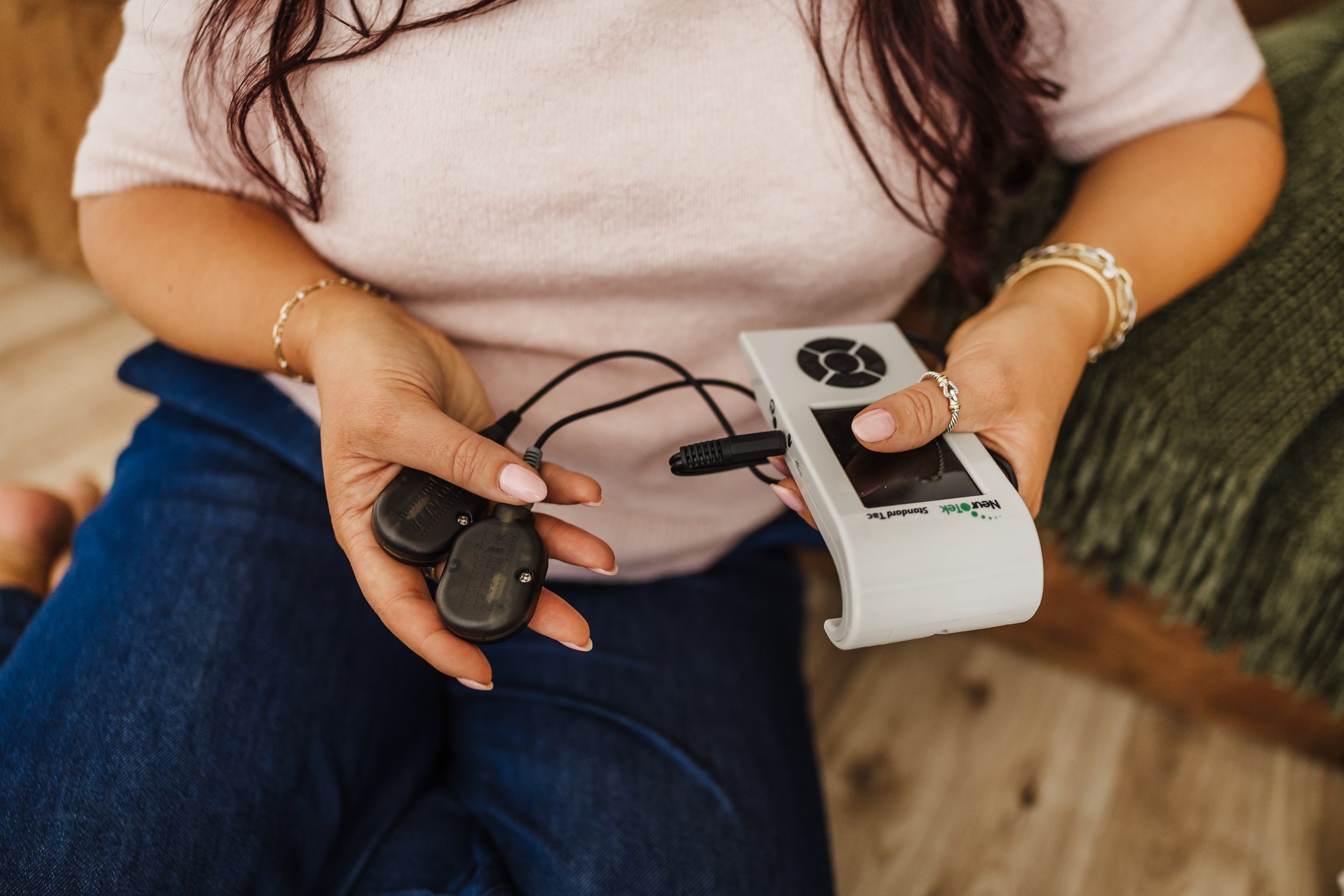
EMDR is an eight-phase trauma therapy based on the idea that distressing memories get “stuck” when unprocessed, continuing to drive present-day reactions. The client briefly holds a target memory, with its image, negative belief, and body sensations, while engaging in bilateral stimulation such as eye movements, tapping, or tones. Over repeated sets, the memory’s emotional charge decreases and more adaptive beliefs take hold, without detailed narration of the event.
Eye Movement Desensitization and Reprocessing (EMDR)

DBT is a skills-based approach developed by Marsha Linehan for people with intense emotions and difficulty regulating them. It balances acceptance and change through four skill areas: mindfulness, distress tolerance, emotion regulation, and interpersonal effectiveness. Its structure makes it a strong foundation for stabilizing clients before or alongside trauma processing.
Dialectical Behavioral Therapy (DBT)

Structural Dissociation
Structural dissociation is proposing that overwhelming trauma causes the personality to split into separate parts organized around survival. An apparently normal part (ANP) manages daily life and avoids reminders, while emotional parts (EPs) hold the fear, shame, and defensive responses, with complexity increasing from primary (simple PTSD) to secondary (complex PTSD) to tertiary (DID). Treatment is phase-oriented, beginning with stabilization and cooperation between parts before any trauma processing.